Then one of the twelve disciples—the one named Judas Iscariot—went to the chief priests and asked, “What will you give me if I betray Jesus to you?” They counted out thirty silver coins and gave them to him. From then on Judas was looking for a good chance to hand Jesus over to them.— Matthew 26:14-16 GNT
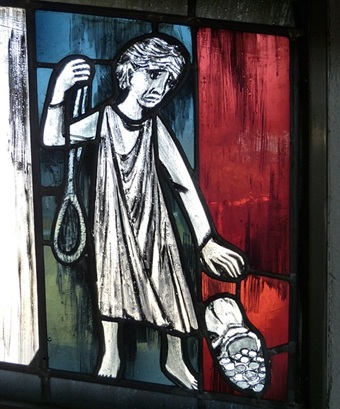
The Apostle John said of Judas that he usually helps himself from the money bag. Was he helping himself for his own personal needs or for the needs of the poor in society?
During the Passover, Jesus announced His betrayal to the disciples: “… ‘I am telling you the truth: one of you is going to betray me’” John 13:21(GNT). The disciples were obviously shocked by this announcement and wanted to know who the betrayer was. “…‘Who is it, Lord?’ Jesus answered, ‘I will dip some bread in the sauce and give it to him; he is the man.’ Jesus gave the bread to Judas and said to him… ‘Hurry and do what you must!’ None of the others at the table understood why Jesus said this to him. Since Judas was in charge of the money bag, some of the disciples thought that Jesus had told him to go and buy what they needed for the festival, or to give something to the poor.” John 13:25-29 (GNT)
Perhaps Judas was keeping something for himself from the money bag. It is also quite possible that he was using the money to buy supplies for the group and giving some to the poor. He may have been helping himself from the money bag to meet these needs without requiring permission or consent from the team. Not making excuses for Judas’ action; just my opinion!
Regardless of how we view Judas Iscariot as a person, there’s a saying that sleeping in a car garage will not make one a car. Judas preached, healed, travelled, and ate with Jesus, yet he allowed his personal desires, hopes and dreams to cloud his faithfulness and loyalty. Spiritual activities do not guarantee spiritual transformation, and a divided loyalty will always lean toward hidden desires.
Sin can blind a person to its consequences. Judas never imagined the outcome of his decision to betray Jesus to the religious leaders. He thought he could control the situation, but sin often promises control but delivers chaos and hides the true cost.
One weapon of the enemy is to bring devastating despair and hopelessness to anyone, whether they believe or not. The enemy’s strategy is to convince a person that forgiveness is impossible. While one can despair over a bad action toward another person, that is, however, not the same as repentance. If Judas had turned to Jesus in repentance, I believe he would have been forgiven. He, however, gave in to despair and hopelessness, which sealed his fate.
The Judas Iscariot’s story highlights some interesting and sobering lessons. Satan did not force Judas to do what he did but simply exploited Judas’ already corrupted motives; that’s just the way the enemy operates.
Let’s endeavour to make the right choices. Let’s have a steadfast, loyal heart and a transformed life as we deal with our fellow human beings and walk with Jesus.
Stay blessed,
LaraLex

