While the people of Israel were still at Rephidim, the warriors of Amalek attacked them. Moses commanded Joshua, “Choose some men to go out and fight the army of Amalek for us. Tomorrow, I will stand at the top of the hill, holding the staff of God in my hand.”
…As long as Moses held up the staff in his hand, the Israelites had the advantage. But whenever he dropped his hand, the Amalekites gained the advantage. Moses’ arms soon became so tired he could no longer hold them up. So Aaron and Hur found a stone for him to sit on. Then they stood on each side of Moses, holding up his hands. So his hands held steady until sunset. As a result, Joshua overwhelmed the army of Amalek in battle.
After the victory, the Lord instructed Moses, “Write this down on a scroll as a permanent reminder, and read it aloud to Joshua: I will erase the memory of Amalek from under heaven.” Moses built an altar there and named it Yahweh-Nissi (which means “the Lord is my banner”). He said, “They have raised their fist against the Lord’s throne, so now the Lord will be at war with Amalek generation after generation.” – Exodus 17:8-16 NLT
I am quite fascinated with biblical, historical and war films and documentaries especially those that shaped the world that we know today. Programmes such as The Vikings, The Last Kingdom, Zulu, The Roman Empire and so on.
In these films, banners and flags are often featured but I’ve never really paid attention to them or ascribed any significance to them. (I’m sure my wife will not be surprised by this statement. She often says to me that I’m never interested in the details of films just the ‘action’ bits!).
Apparently, banners and flags have great political and spiritual significance. In light of today’s scripture, we will explore some of the purposes and significance of banners.
Banners have been used for thousands of years and it means different things to different people. It is sometimes referred to as a flag, a standard, an emblem, or an ensign. It is sometimes used as a symbol indicating authority, relationship, title, and followership.
In ancient history, banners were used to identify and symbolise kings and high-ranking political or military officials. The banners were carried so that citizens could identify their ruler and his entourage and give him the respect due or demanded.
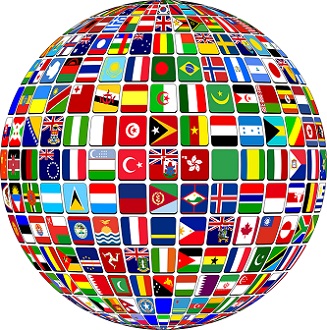
Flags and banners represent and identifies a particular country, state, leader, or group. Individual flags are a symbol of pride and respect for the values, principles, standards or ideals that they stand for. For example, the union jack of the United Kingdom, is a symbol of or connected to British imperialism, patriotism and nationalism. While the United States’ flag is a symbol of liberty, strength and unity.
Banners are often used as rallying points, physically and spiritually. They are sometimes carried at the head of a military band or procession. This is to indicate the rallying point or to symbolise under whose authority the soldiers are gathered or assembled for battle.
In the Bible, while other nations’ armies would go into battles with their rallying flags and banners, the Israelites would go with God’s presence as their Banner. “Then you planted a flag to rally your people, an unfurled flag to look to for courage…” Psalms 60:4 (MSG)
Jehovah Nissi, The LORD our Banner, in Him we find our victory and significance. We shall discuss this in the next blog.
Stay blessed,
LaraLex
 Hills and Valleys